01 / Patch AR
Make the stochastic choice once at patch level
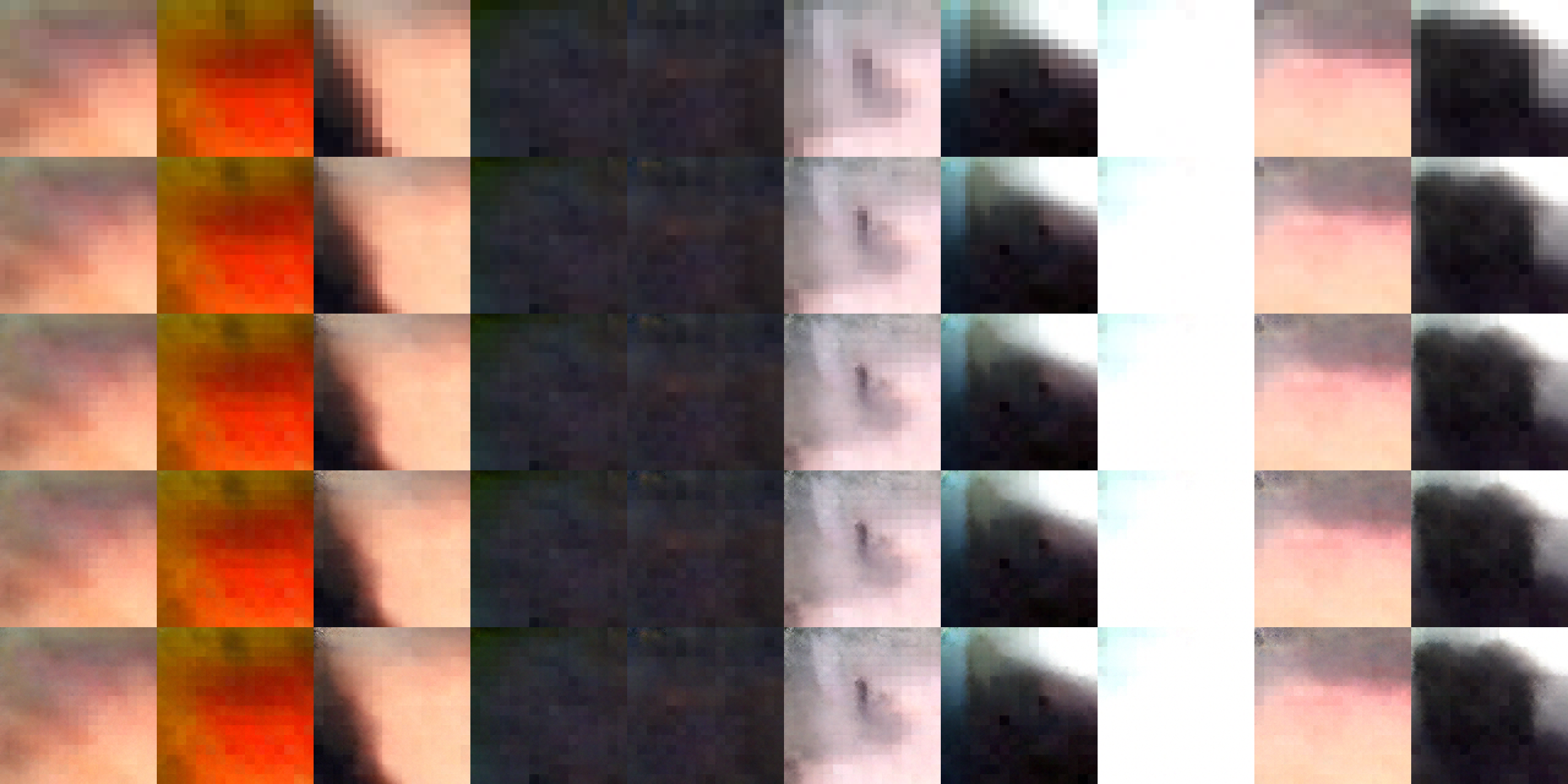
HPA reruns stochastic DMoL sampling at every resolution, lengthening inference and creating another opportunity for history drift at each level. v0.17.9 changes the division of labor: one patch-level AR state carries global order and stochastic mode, while non-AR cascade decoders generate [1,2,4,8,16] resolutions conditionally.
one stochastic patch AR → deterministic context → multiscale DMoL decoders. Random mode choice is concentrated once; fine stages refine the same mode.
The pipeline is not fully deterministic—DMoL heads can still sample RGB—but fine levels no longer own separate patch-level causal processes. The objective is to reduce hierarchical exposure bias while preserving multiscale supervision.
02 / Residual DMoL
Predict only the innovation relative to the parent
v0.17.9.2 first adds flow-to-uniform noise to training history, but is stopped after about 10 hours 50 minutes because the available samples do not indicate that random corruption reaches the core failure. v0.17.9.3 then changes the objective to a Laplacian-style residual:
L0 predicts absolute RGB, while L1+ predict residual DMoL. Restored absolute RGB is used for visualization and downstream conditioning. This prevents a fine head from achieving low absolute likelihood merely by copying its parent.
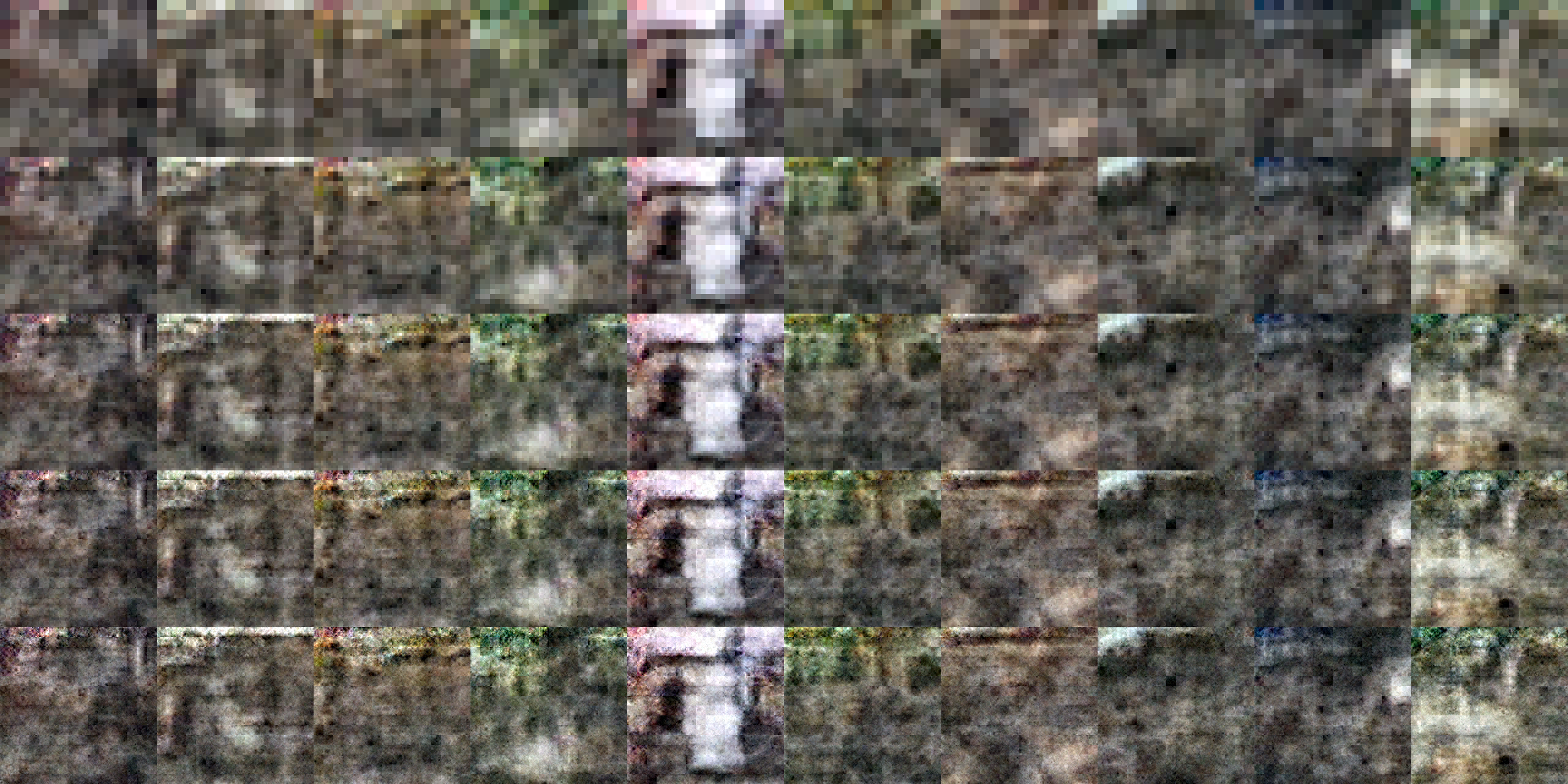
v0.17.9.3c debug chain at 2k. Early dynamics are healthier than the gamma-2 hard-loss branch, but this is not evidence of final convergence quality.
03 / Hard residuals
Emphasizing high-energy residuals produces texture templates rather than semantic edges
GT residual energy is sparse. A threshold of 8/255 retains only about 23.6%–44.1% of groups while retaining 94.6%–97.4% of residual energy. v0.17.9.3B therefore keeps base DMoL and adds a batch-minmax difficulty-weighted term:
With γ=2, λ=1, the hard term dominates fine-level losses and generates black-and-white high-frequency fields. Reducing γ to 1 improves the 1k→2k dynamics, but a 40k diagnostic still over-emphasizes high-frequency texture/noise. The final change to a weak λ=0.1 auxiliary has no completed result that supports a success claim.
| Residual statistic | GT | v0.17.9.3B generated |
|---|---|---|
| Chroma ratio | 0.374–0.418 | 0.110–0.139 |
| RGB correlation | about 0.75–0.93 | about 0.996–0.999 |
| Reading | Luminance edges plus chromatic detail | Nearly grayscale edge/texture templates |
04 / Compact CA
More parameters do not imply a stronger pixel readout
v0.17.9.4 introduces PixelDiT/PRA-style compact cross-attention: compress per-pixel tokens into one compact token, read AR memory, then expand back to pixels. Total parameters increase from about 709.6M to 745.9M, and decoder-side parameters from 57.0M to 93.2M, yet all five rows remain pure noise at 6k steps.
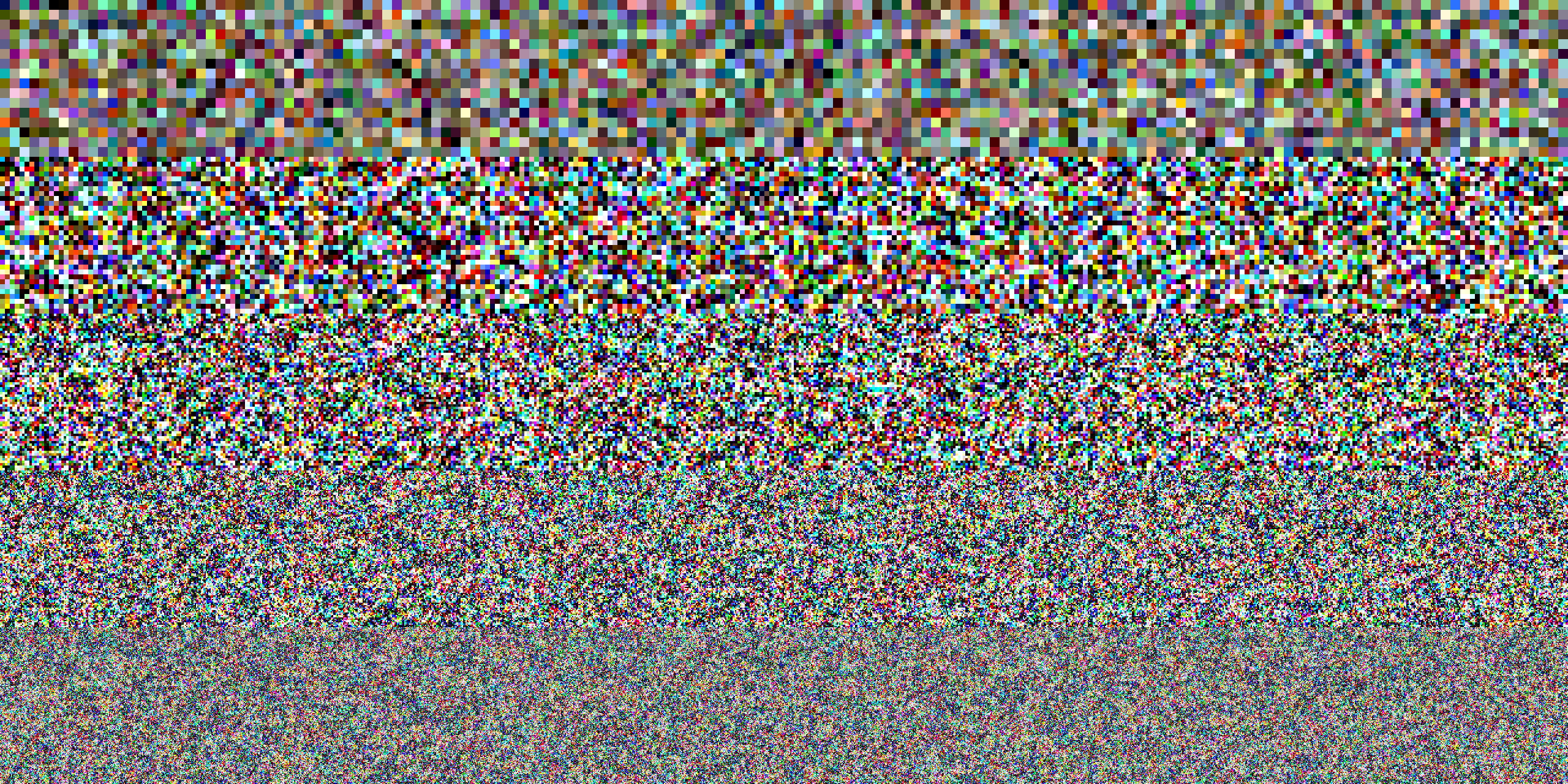
v0.17.9.4 at 6k. Smoke tests and tensor shapes pass, but training dynamics lag far behind v0.17.9.3.
Three simultaneous changes explain the regression: the new decoder also replaces L0; each pixel state is only eight-dimensional; and all positions share an 8→100 DMoL readout with zero-initialized pixel positions. Capacity moved into 1280-dimensional CA matrices while the position-specific pixel distribution became much weaker.
v0.17.9.4b reduces compact width to 512, increases pixel width to 64, and restores an interface closer to v0.17.9.3. It reaches about 66k before walltime. The supported statement is only that it avoids the same immediate collapse—not that final quality improves.
05 / Conclusion
Concentrated stochasticity is promising, but refinement still needs explicit spatial dependency
- 01
Keep one patch-level mode selection
It reduces repeated mode changes and makes structural failures easier to localize.
- 02
Keep residual targets
They explicitly request innovation, but the loss must not chase high-energy texture alone.
- 03
Reject strong hard loss as a substitute for structure
Weights can identify hard pixels, but cannot create a coherent edge mode across pixels.
- 04
Next question: combine local AR with parallel patches
We need strict pixel dependency inside each patch without serializing all 256 macro patches.
